
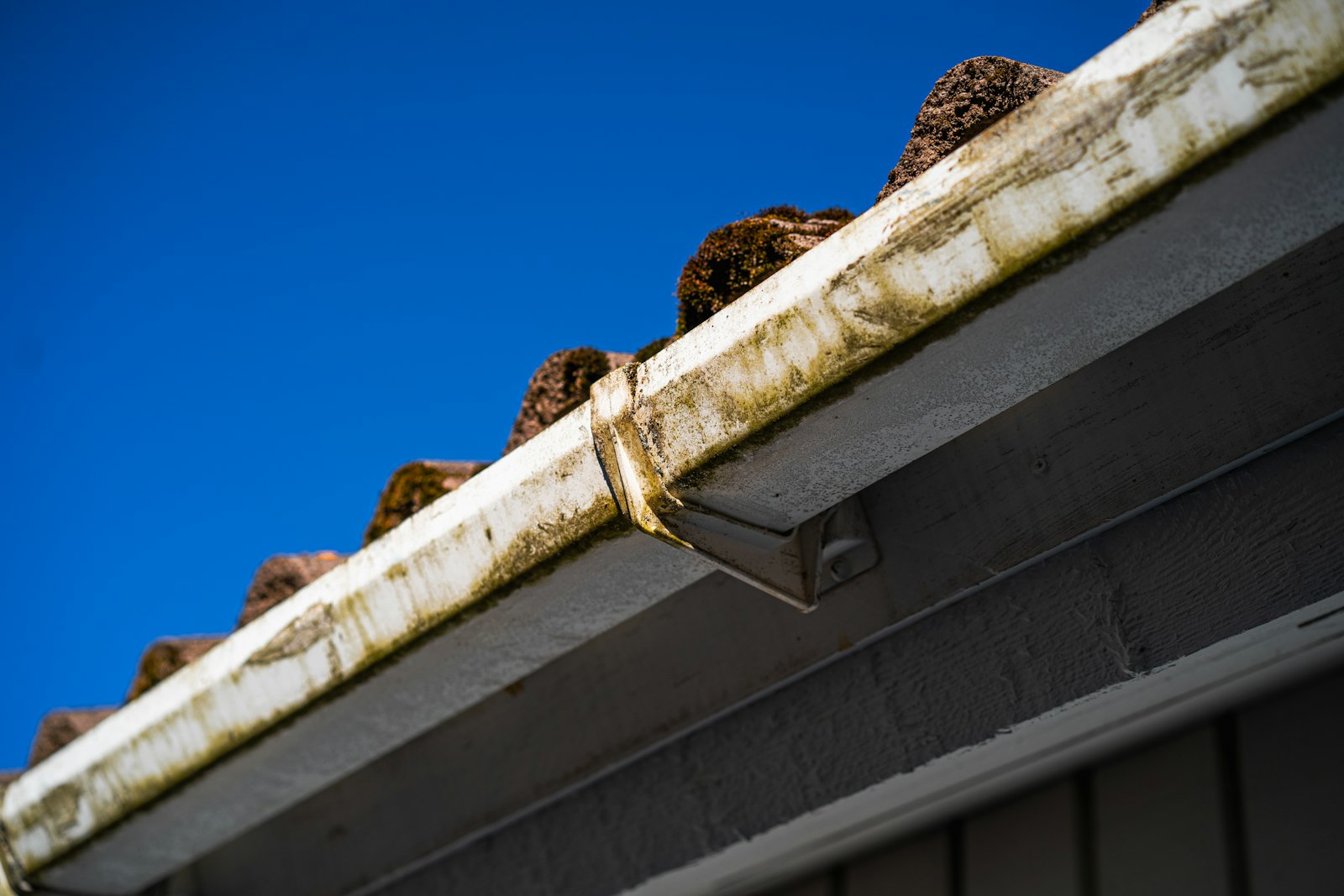
If you have ever watched a gutter crew set up and wondered why they hauled a machine the size of a chest freezer into your driveway, this post is for you. That machine is the entire difference between the gutters your grandparents had and the gutters worth putting on a house today, and understanding what it does makes you a sharper buyer no matter who you hire.
The problem with seams
Old-style sectional gutters came in ten foot lengths from the store, joined with slip connectors and sealant every ten feet. Do the math on an ordinary Cincinnati ranch: a 40 foot back roofline meant three joints minimum, each one a bead of sealant living outdoors through our freeze and thaw winters.
Sealant is the weak link. It dries, shrinks, and cracks on a schedule of years, not decades. Every joint is a future drip, and every drip lands in the same spot below, working on your fascia, your soffit, and eventually your foundation line. Ask anyone who has owned sectional gutters what fall maintenance looked like. Reseal, watch, reseal again.
What the machine in the driveway does
A seamless gutter machine is a roll former. Flat aluminum coil goes in one end, and finished gutter profile comes out the other, formed through a series of rollers into the familiar K-style shape. The crew measures your roofline, runs the machine to that exact length, and cuts once.
Need 22 feet for the front porch and 61 feet for the back? The machine makes a 22 foot gutter and a 61 foot gutter. One piece each. No joints, no sealant along the run, nothing to dry out in year six.
This is why the machine has to come to you. Nobody can deliver a 61 foot gutter down the interstate, but a coil of flat aluminum rides in the truck just fine. The factory comes to the driveway, which is honestly one of the better ideas the trades ever had.
Where skill still decides everything
Seamless removes seams from the straight runs. It does not remove the installer from the equation, and we would be selling you something dishonest if we pretended otherwise.
Corners are joined and sealed by hand, and a clean miter is craft. Downspout outlets are cut and sealed. Pitch is set by the crew, about a quarter inch of fall per ten feet toward the downspout, invisible from the ground but the difference between a gutter that drains and a gutter that grows mosquitoes. Hanger spacing decides whether the run stays straight under a load of wet leaves or an ice ridge in February.
A machine-formed gutter hung badly is still a bad gutter. The machine just means that when the work is done right, there is almost nothing left to fail.
Why this matters more in our climate
Greater Cincinnati weather is a seam-testing laboratory. Freeze and thaw cycles flex every joint dozens of times a winter. Spring brings hard rain that finds every gap. Summer heat cooks sealant, and the mature trees that make neighborhoods like Mariemont and Loveland worth living in keep gutters loaded with debris that holds moisture against every joint.
Sectional systems fight that fight at every connector. Seamless systems fight it at the corners only, with modern sealants, on joints a good crew has made carefully by hand. Fewer battles, better odds.
Can a seamless gutter be repaired if it gets damaged?
Storms take their toll around here. A limb comes down on the back corner, a ladder leans where it should not have, or hail leaves a stretch dented like a range ball. The good news is that aluminum is forgiving, and a damaged section can be cut out and replaced without touching the rest of the run.
The honest part is what that means. A splice in a seamless run is a seam, sealed by hand the same as any corner joint. One splice on a 60 foot run is no crisis. But when the damage sits on a 15 or 20 foot section, we would usually rather pull the run and form a new one-piece replacement right there in the driveway. It puts the gutter back the way it was built, with nothing added that can dry out later. That is the machine paying for itself a second time.
Five inch or six inch
One more decision the on-site machine makes easy: size. Standard five inch K-style handles most rooflines, but plenty of Cincinnati homes need more. Steep pitches shed water faster than flat ones, large roof planes collect more of it, and the newer subdivisions around Mason and West Chester combine both. A five inch gutter on that roof does everything right and still overflows in a July downpour, because the water simply arrives faster than the trough can carry it.
Six inch gutter carries roughly forty percent more water and pairs with larger downspouts that shrug off the maple seeds and oak tassels that clog standard outlets every spring. The machine forms either profile on site, so the choice is not a special order, it is a measurement and a conversation during the estimate. The right answer comes from your roof, not from a price sheet.
What to ask whoever you hire
Ask if the gutters are formed on site from coil, and what gauge aluminum they run. Ask how they set pitch and what hanger spacing they use. Ask what the corner joints get sealed with. Then ask how long the crew doing the work has been doing it, because every answer above only matters in experienced hands.
We have been forming and hanging seamless gutters across Greater Cincinnati, Northern Kentucky, and Southeast Indiana since 1991, with Alcoa aluminum products and our own crews, no subs. If your gutters are due, get a free estimate and we will measure it, price it, and stand behind it. The number we quote is the number you pay.